Cyberattacks are no longer a problem reserved for large enterprises. Small and medium-sized businesses across Markham are increasingly being victims of cybersecurity threats and attacks because they often have valuable data and fewer cybersecurity resources. Whether it’s ransomware, phishing emails, or compromised Microsoft 365 accounts, a single successful attack can lead to downtime, financial loss, and reputational damage.
According to the Canadian Centre for Cyber Security’s National Cyber Threat Assessment 2025–2026, ransomware remains one of the most disruptive cyber threats facing Canadian organizations, while cybercriminals continue to adopt AI and automation to make attacks more effective.
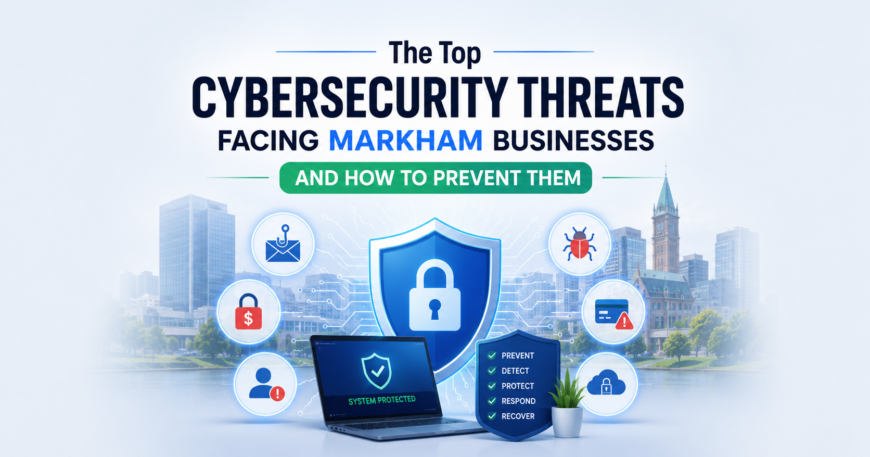
In this guide, we will take a closer look at the leading cybersecurity threats Markham businesses are facing and the best ways to prevent them.
Why Markham Businesses Are Attractive Targets
Many business owners believe attackers only target large corporations, but that’s rarely the case.
Most cybercriminals look for organizations with weak passwords, outdated software, limited security monitoring, or employees who haven’t received cybersecurity awareness training. Professional services firms, manufacturers, healthcare providers, retailers, and other growing businesses in Markham often rely heavily on digital systems, making them attractive targets regardless of company size.
The Top Cybersecurity Threats Markham Businesses Should Watch For
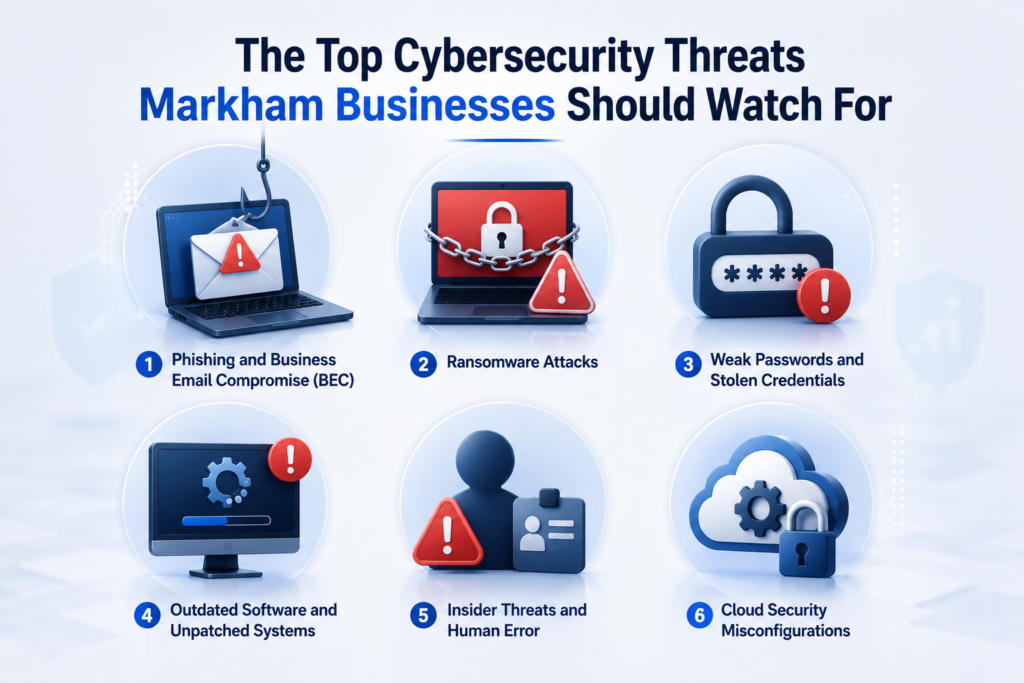
Phishing and Business Email Compromise (BEC)
Phishing remains one of the most common ways attackers gain access to business systems. Modern phishing emails often imitate trusted vendors, banks, or even company executives, making them difficult to detect.
How to reduce the risk
- Employee security awareness training
- Multi-factor authentication (MFA)
- Advanced email filtering
- Verification procedures for financial requests
Read more: How Email Phishing Attacks Are Evolving And How to Stop Them
Ransomware Attacks
Ransomware can encrypt files, disrupt operations, and demand payment for data recovery. Modern ransomware groups often steal sensitive information before encrypting it, increasing the pressure on victims.
How to reduce the risk
- Immutable backups
- Endpoint detection and response (EDR)
- Timely patch management
- Network segmentation
- Tested disaster recovery plans
Read more: Why Canadian SMBs Need Advanced Ransomware Protection in 2026
Weak Passwords and Stolen Credentials
Passwords remain one of the easiest ways for attackers to compromise business accounts. Reused passwords, weak credentials, and missing MFA can expose Microsoft 365, cloud applications, and remote access systems.
How to reduce the risk
- Password managers
- Multi-factor authentication
- Conditional access policies
- Regular account reviews
Outdated Software and Unpatched Systems
Cybercriminals actively exploit known software vulnerabilities. Delaying updates gives attackers more opportunities to compromise business systems.
How to reduce the risk
- Automated patch management
- Hardware lifecycle planning
- Vulnerability assessments
- Continuous monitoring
Insider Threats and Human Error
Not all cybersecurity threats come from external hackers. Employees can accidentally expose sensitive information, misconfigure systems, or fall victim to social engineering attacks.
How to reduce the risk
- Least-privilege access
- Security awareness training
- Data access reviews
- User activity monitoring
Cloud Security Misconfigurations
Businesses increasingly depend on Microsoft 365, cloud storage, and SaaS applications. Incorrect permissions, weak identity controls, or missing backups can expose sensitive business data.
How to reduce the risk
- Microsoft 365 security reviews
- Identity and access management
- Secure cloud configuration
- Microsoft 365 Backup
Read more: Protecting Microsoft 365 Data with Microsoft 365 Backup
Build a Layered Cybersecurity Strategy
Cybersecurity isn’t about relying on a single product. The strongest protection comes from multiple security layers working together.
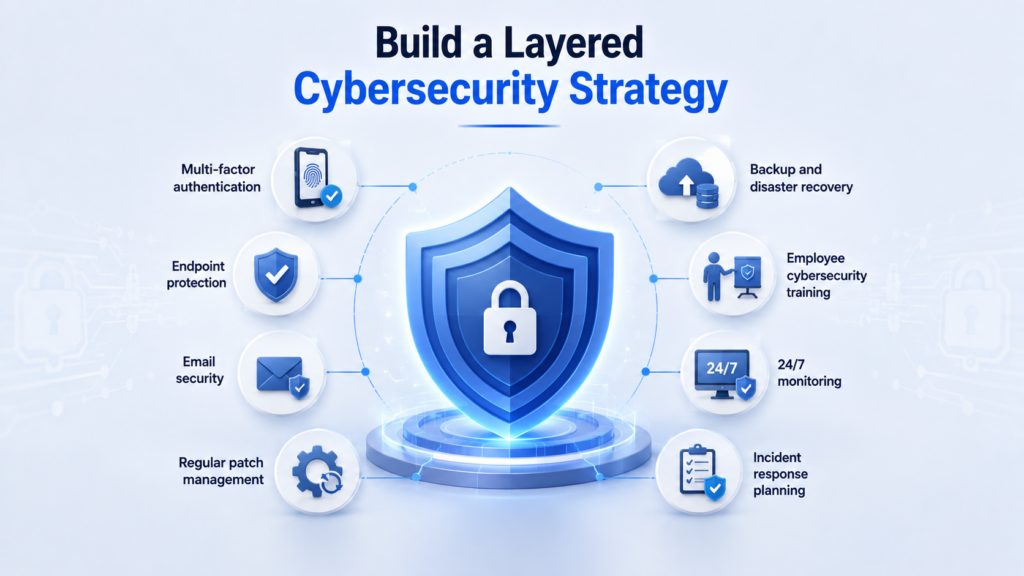
An effective strategy includes:
- Multi-factor authentication
- Endpoint protection
- Email security
- Regular patch management
- Backup and disaster recovery
- Employee cybersecurity training
- 24/7 monitoring
- Incident response planning
Together, these measures significantly reduce the likelihood that one mistake or vulnerability will become a serious business disruption.
Why Proactive IT Management Makes a Difference
Many businesses only think about cybersecurity after experiencing an incident.
Managed IT services take a different approach by continuously monitoring systems, applying security updates, reviewing user accounts, managing backups, and identifying suspicious activity before it develops into a larger problem.
Instead of responding only after something breaks, businesses gain ongoing protection and expert guidance as cyber threats continue to evolve.
How Sun IT Solutions Helps Protect Markham Businesses
Cybersecurity requires more than installing antivirus software. It requires continuous attention.
At Sun IT Solutions, we help businesses in Markham strengthen their defenses through managed IT services, cybersecurity monitoring, Microsoft 365 security, backup and disaster recovery, endpoint protection, network management, and proactive IT support. Our team works to identify vulnerabilities before attackers do, helping reduce downtime and protect the systems your business depends on every day.
When you need support, you won’t be left waiting. Clients wait an average of 15 seconds to speak with a technician, 91% of issues are resolved on the first call, and 99% of our clients stay with us for five years or longer.
Book your free consultation and let us help you stay secure and prepared for the cybersecurity threats of today and tomorrow.

